Trusted Eye: Post-World War II Adventures of a Fearless Art Advocate
By Claudia Fontaine Chidester
With a foreword by Ann Reynolds and essays by Graeme Reid and Dorothea Schöne.
…brimming with beautiful photographs..a thoughtful biography–Kirkus Reviews
…tell a history we all need to hear.—Ann Reynolds, PhD, author of Robert Smithson: Learning From New Jersey and Elsewhere
…crusader for art in post-WWII Germany…an adventure–Ann Daly, PhD, author of Done into Dance: Isadora Duncan in America
…riveting..densely packed..of great interest to … historian… women’s history ..or art —Yule Heibel, PhD, author of Reconstructing the Subject: Modernist Painting in Western Germany, 1945-1950
…exceptional woman…unique figure with…a bone-deep passion for art—John Gurda, author of The Making of Milwaukee
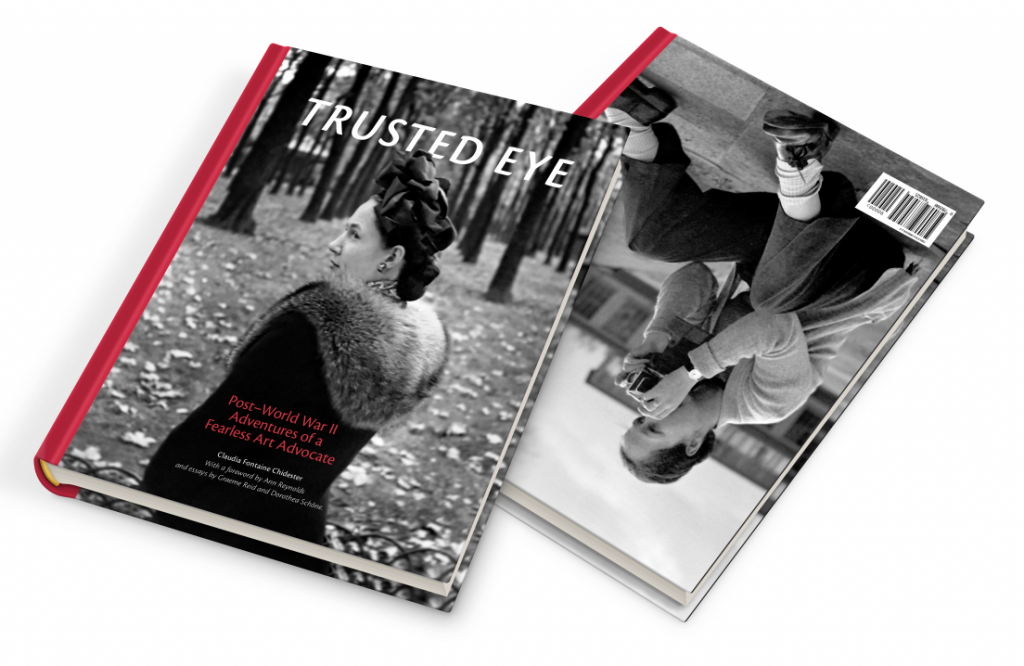
A fascinating book, rich in archivalia, anecdotes, and insight, Trusted eye documents the life and career of Virginia Fontaine (née Hammersmith, 1915–91), “one of the most important promotors of art among the members of the American occupation forces” in immediate post–World War II Germany (181). The art she promoted was modern art, especially German expressionism and abstraction, both of which had been deemed “degenerate” in Nazi Germany and which she helped to reestablish in the western zone of occupation and, after 1949, the Federal Republic of Germany. The author, Fontaine’s youngest daughter, was born in Frankfurt in 1956 and grew up in Germany and Mexico. In Austin, Texas, she has created the Fontaine Archive, which documents the life and work of her mother and father, the painter and graphic designer Paul Fontaine (1913–96). Trusted Eye will be of great value to readers interested in three themes: first, women’s often underacknowledged, unappreciated, and obstacle-filled role in the creation and promotion of modern art; second, the art world of early twentiethcentury Milwaukee, which first formed Virginia Fontaine’s “trusted eye”; and third, most significantly, the postwar reconstructive period of German culture, specifically visual art, where Virginia and her family formed an important link between the American occupying authorities, including the “Monuments Men” and women, and German artists, art dealers, and museum professionals. (Full Review Information & Culture, Vol. 58, no. 1, 2023)
–Peter Chamtezky , PhD, University of South Carolina author of Turks, Jews, and Other Germans in Contemporary Art ( 2021, MIT press)
A biography of Virginia Fontaine, a key player in the German art scene following World War II.
…
A vivid recollection of Fontaine’s fascinating life emerges—one that the author allows to be conveyed largely through Fontaine’s letters, a strategy that provides her with a measure of objectivity despite her obvious love and admiration for the subject. As Ann Reynolds aptly puts it in her foreword: “Her book, then, is not a memoir; it is a biography that subtly frames primary documents so that Virginia Fontaine’s voice draws the threads of her own life together to tell a history that we all need to hear.” Moreover, the book is brimming with beautiful photographs of both people and artwork. A thoughtful biography of an important figure in art history, handsomely adorned with photographs. (Full review)–Kirkus Reviews
Fascinating 20th Century Art History Book for Critics, Curators, Professors, & Students
…Reviews that this writer has read of “Trusted Eye” do an excellent job of covering the major themes of Virginia Hammersmith Fontaine’s life. No review, however, stresses that this book successfully integrates adventurous descriptions, alluring photographs, lovely images of paintings, artists’ charming cartoons, short biographies, original letters, different text sizes, carefully researched footnotes, a well-constructed index — and that one of the essays by art expert (Dorothea Schöne) is printed both in the original German and in the English translation, reinforcing the volume’s overall authenticity.
The reviews give scant attention to who should consult this book. The answers are — Art historians, who will appreciate Virginia’s perceptions on important and lesser-known German artists. For military historians, the book includes unique insights on the Allied occupation of Germany after 1945. Art curators will be delighted by Virginia’s manner of appraising paintings, and art critics could borrow some of her phrases to either praise or disparage paintings and painters. Social historians would have a revealing example of gender discrimination at a leading US university — and also in the US military. American historians would recognize how McCarthyism damaged the reputations and greatly disrupted the lives of those whom the evil senator unjustly accused of nefarious associations. Art collectors would learn from Virginia’s pursuit of direct contacts with artists in their studios (which is also a theme in Chidester’s Epilogue). Engravers will be honored by the high status the book attributes to their creativity. Full review
—-Peter S. Cleaves, Ph.D. retired professor, University of Texas at Austin, College of Liberal Arts
Blending biography and memoir, the author paints an engaging portrait of an exceptional woman who happens to be her mother. Trusted Eye follows Virginia Fontaine from a childhood of relative privilege in Milwaukee to the hardships of post-World War II Germany and on to life as an expatriate in Mexico. What emerges is a well-rounded and thoroughly documented profile of a unique figure with a gift for friendship and a bone-deep passion for art.
— John Gurda, author of The Making of Milwaukee
Trusted Eye chronicles the rich and vibrant life of Virginia Fontaine, a gifted, formidable woman who turned the limitations imposed by her era into an adventure that will be the envy of every art lover who encounters it. Through a captivating mix of photos, reproductions, and narrative, as well as fascinating contemporaneous documents, her life in post-World War II Germany comes into clear focus, illuminating her vital role in supporting artists and rebuilding the cultural fabric of the vanquished country in the bright light it deserves. I wish I could have been along for the ride
–C.F. Yetmen, author of That Which Remains
What a pleasure to discover the extraordinary life of Virginia Fontaine, an ordinary housewife –and thwarted artist – from Wisconsin who finds her métier as a “crusader for art” in the turmoil and excitement of post-WWII Germany. Virginia never says “no” to an adventure, and we get to go along for the ride in this intimate treasure trove of letters, snapshots, clippings and memories compiled by her daughter Claudia.
— Ann Daly, author of Done into Dance: Isadora Duncan in America
Claudia Fontaine Chidester’s Trusted Eye renders her artistic mother’s historic contributions as a mid-century “crusader for art” in war-torn Germany. Virginia Fontaine had relinquished her Yale art training for the sake of her husband’s – “A family can only have one artist,” Virginia decreed – then spent postwar years in ravaged Frankfurt helping other artists not to relinquish theirs. The reader of Trusted Eye becomes archivist alongside Chidester, exploring fascinating letters, photos and paintings that illustrate her montage-style narrative. Chidester relates family history with loving admiration and healthy distance, as she skillfully manages an abundance of details and exhibits clear mastery of her formidable archive. Early inclusion of Virginia’s dark, realist painting, Flood, accentuates her mother’s weighty sense of loss and burden as she longed to travel, to work, and to earn wages. However, Chidester’s ensuing portrayal of Virginia’s colorful international friendships and her keen modernist eye denotes Virginia’s remarkable resourcefulness in salvaging an artistic life amidst ruins. Moreover, Chidester reveals through her own artistic writer’s voice that, in fact, a family can have many artists. Highly recommend.
–Mimi Killinger, author of Painted Flowers Shouldn’t Talk Back: The Houston Garden Artists in the Seventies (forthcoming Texas A&M Press, July 2021)
Trusted Eye is a riveting, well-paced, and densely packed account of the remarkable life of Virginia Hammersmith Fontaine. It will be of great interest to the historian, whether of early-20th century American history, post-World War II German history, or women’s history. Virginia Fontaine’s story has it all.
Claudia Chidester has created a successful blend of biography based on correspondence and personal recollection, coupled with detailed historical context.
We learn about Virginia’s youth, her embeddedness in midwestern community with its strong family values, through an account of her roots. About her ability to labor indefatigably in building a house from the foundation up. About her dreams to be an artist, but also her willingness to put her own ambitions on the back burner as she works to promote her painter husband’s work instead. This teaches her about networking within her local art communities, prior to her move to bombed-out Frankfurt in 1946 to join her husband.
We learn also about the difficulties of trying to establish a (paying!) career in her new milieu. Virginia Fontaine was eminently successful in surfacing artists and making connections for them and for herself in postwar Germany, but she didn’t receive the career credit this work deserved. Yet Virginia, unlike many other wives and mothers, wasn’t shy about pushing herself as hard as possible, even if it came at the expense of some conventions. Trusted Eye goes the distance to shine a spotlight on her remarkable career, and in doing so we glean valuable insights into the price of being faithful to one’s ideals
I recommend this book to anyone interested in biography, or art, or history.
–Yule Heibel, PhD, author of Reconstructing the Subject: Modernist Painting in Western Germany, 1945-1950
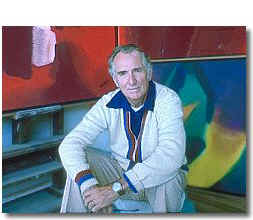
Paul Fontaine
Celebrating the life and work of an abstract artist who captured beauty in his modernist works Post-World War II
The Fontaine Archive documents the life and work of Paul Emile Fontaine (1913-1996) as well as writings and photography of Virginia Hammersmith Fontaine (1915-1991), his wife, capturing life as artists and Americans in postwar Germany from 1935-1965.
News and updates from the Fontaine Archive including exhibits and publications
Two books highlighting the
Fontaine Archive’s collection